
Menu Close

Orthorexia Nervosa: Taking Clean-Eating to an Obsessive Level

In the past few years, it seems as though everyone is “eating green” or only “all-organic” food. Although there are many health benefits to this new trend towards “clean-eating,” there is a point when the practice can take over a person’s life and become damaging to their behavioral health. Related to eating disorders, orthorexia nervosa is a condition in which a person has obsessive behaviors, which may include: self-induced dietetic limitations and preparing and eating food in a ritual-like manner, all to achieve and maintain a “pure” diet.


Read More »

Eating Disorders, Weight Restrictions, and Youth Sports

Did you know that youth sports can lead to eating and weight problems with certain individual kids or teenagers? Did you know that within some youth sports leagues weight restrictions are put on certain positions within a sport? Many popular sports are known to be “weight sensitive” including ballet, gymnastics, figure skating, wrestling, track/cross-country, and horse-back riding.

Read More »

Disordered Eating VS Eating Disorders

Often times when people hear the term “disordered eating,” they assume it’s another way of saying one has an eating disorder. However, these terms are not interchangeable. With an eating disorder, food intake and weight issues consume your thoughts and actions making it nearly impossible to focus on anything else; it is a mental illness. Eating disorders often cause multiple, serious physical problems and, in severe cases, can become life threatening.

Read More »

Depression Treatment: CBT (Cognitive-behavioral Therapy)

Cognitive-behavioral therapy, or CBT, for depression really started in the 1960’s with behavioral therapy treatments focusing on activity scheduling. CBT today still includes many of these early interventions. Activity scheduling, and its modern form, called behavioral activation, is based on the idea that individuals’ moods and activities are highly related. That is, when people become depressed, they tend to change what they do. For

Read More »

Eating Disorder Resources that Work: Part 5

Eating Disorder Hope (link is external) – EatingDisorderHope.com’s mission is to provide information and resources for patients and families. Since 2005, their philosophy of promotes ending eating disorder behavior and pursuing recovery. Eating Disorder Hope has a very robust social media presence, as well as the following programs in order to assist both people in recovery and families who support those recovering:

Read More »

Eating Disorders Resources Working For Patients and Families

Eating disorders require treatment and there are thousands of people in the U.S. who have made it their life’s work to make treatment more effective, make recovery easier and readily available. There are very strong organizations related to the treatment and care of eating disorders that help patients and families not only find a path to recovery, but also resources to stay healthy and keep those who remain in recovery on the right path. This 5 part series will focus on some of the resources available to patients and families that help make a difference in the treatment of eating disorders:

Read More »

Part 1: A Silent Problem in the Workplace

Eating disorders – including anorexia nervosa, bulimia nervosa and binge eating disorder – affect as many as 5 million Americans every year. While eating disorders typically affect females, males make up as much as 25 percent the total population of people with eating disorders.

Read More »

A Proven Approach to Eating Disorder Treatment

At Rogers, we look to science to inform our treatment approach. Within the past few years, numerous research studies have shown that Dialectical Behavior Therapy (DBT) has been an effective tool to help people with eating disorders challenge their patterns of thinking and behaviors that cause and maintain their eating disorder, such as restricting, binging, purging and self-harm.

Read More »

Recovery from Addiction is Possible

The observance of National Recovery Month, according to SAMHSA(Substance Abuse and Mental Health Services Administration), promotes the societal benefits of prevention, treatment, and recovery for mental and substance use disorders, celebrates people in recovery, lauds the contributions of treatment and service providers, and promotes the message that recovery in all its forms is possible.

Read More »

Eating Disorder Treatment Helps Patients Learn to Enjoy Meal Times

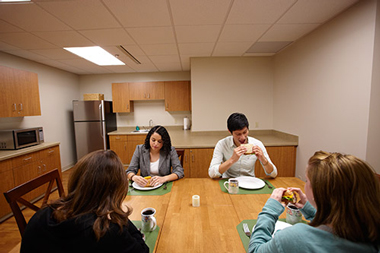
One of the benefits of residential treatment for eating disorders is the structure and support that is built in to every activity, including meal and snack times. Sarah Biskobing, RD, CD, a dietitian at Rogers Memorial Hospital’s Eating Disorder Center, said that these times can be one of the most anxiety provoking parts of a patient’s day. As a result, there is always a treatment team member available to support them as they learn to adapt to normal eating habits.

Read More »