

The dangers of diabulimia
Though many are familiar with the dangers of anorexia and bulimia, only recently has the term diabulimia entered mainstream conversations about eating disorders.
Though many are familiar with the dangers of anorexia and bulimia, only recently has the term diabulimia entered mainstream conversations about eating disorders.

It’s common for someone with an eating disorder to also experience another co-occurring mental health disorder such as depression, OCD, or anxiety. When it comes to eating disorders and a co-occurring substance use disorder, Brad Smith, MD, medical director, Oconomowoc campus and Eating Disorder Recovery, says that it is almost always best to try and treat both simultaneously.

Nearly 29 million Americans will have an eating disorder in their lifetime. For those who seek treatment, dietitians at Rogers play an important role on their treatment team.

Youth sports can offer excellent benefits for kids, including the chance to make friends and socialize, build teamwork skills, and participate in physical activity. In some cases, though, they can experience such an intense pressure to succeed that they experience negative views and behaviors around weight, food, and nutrition.
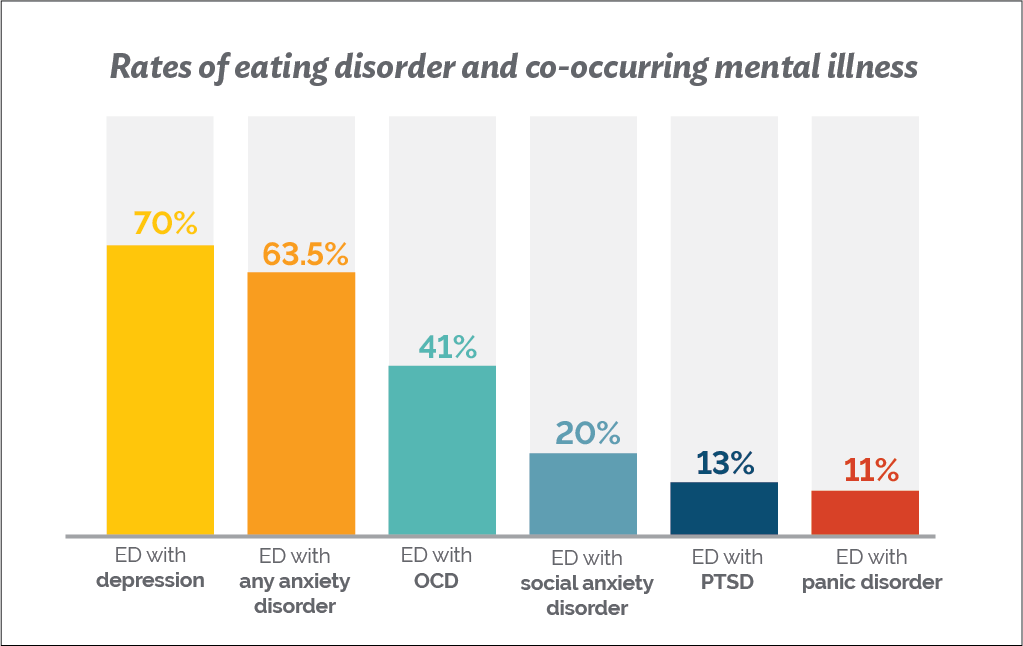
People with eating disorders are at an increased risk for developing or being diagnosed with other mental illnesses. Depression tops the list with a 70% lifetime prevalence in people with eating disorders.

For the estimated 30 million Americans suffering from an eating disorder, coping with the stress of the COVID-19 pandemic is proving an exceptional challenge.

Have you ever stopped to look in the mirror one last time before you went out or smoothed your stomach after putting on your favorite top? Many people do this on occasion, but when might it be a sign of an eating disorder?

Two patients in Rogers’ Eating Disorder Recovery adolescent residential care recently created 1,000 butterflies as a message of hope to others who are struggling.
Millions of people nationwide, from all backgrounds, experience eating disorders. Unfortunately, the signs are not always obvious. Dr. Brad E.R. Smith sheds light on some hidden signs.

It can be difficult to decide where to seek treatment for an eating disorder. Two key points to look for are the use of clinical assessment tools and outcomes. Nicholas Farrell, PhD, Oconomowoc campus clinical director and clinical supervisor of Eating Disorder Recovery, says Rogers’ focus on assessments and outcomes data is the thing that sets Rogers apart as a leader in the treatment of eating disorders.